Improving estimates of how aerosols influence cloud droplet formation
Clouds form when aerosols take up water and become droplets. Knowing how many droplets form from a given number of aerosols is important for predicting weather and climate, but this is difficult to measure because many factors affect droplet formation.
A new study by Irfan et al. focused on marine stratocumulus clouds, one of the most common cloud types over oceans. Because they reflect sunlight and cover large areas, these clouds play a key role in regulating Earth’s energy balance. Even in these relatively stable cloud systems, variability in local weather and aerosol properties makes the connection between aerosols and cloud droplets complex.
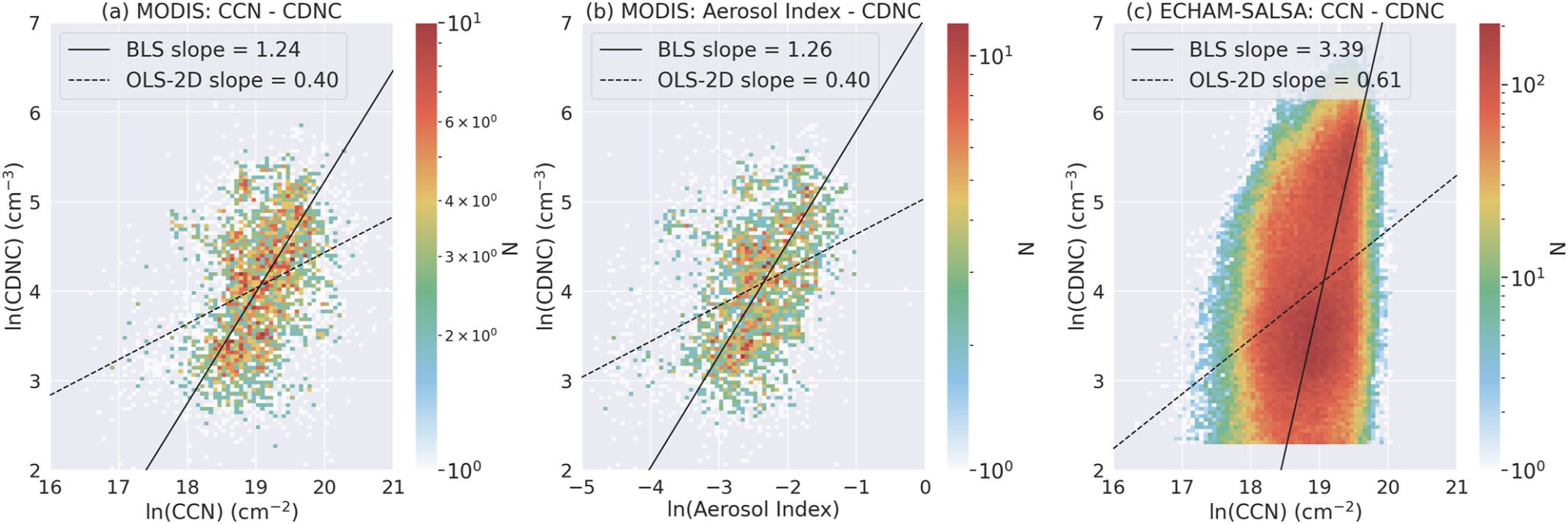
Traditional statistical methods often fail to capture this relationship accurately and can produce biased or physically unrealistic estimates on how cloud properties respond to changes in the amount of aerosol, leading to uncertainties in predictions. By applying a machine learning method called Elastic Net Regression (ENR), the study identified key factors influencing cloud droplet formation, particularly updraft strength, which controls how aerosols activate into droplets, and obtained more physically consistent estimates of cloud droplet susceptibility to aerosol changes.