How Saharan dust influences the marine boundary layer over the Atlantic
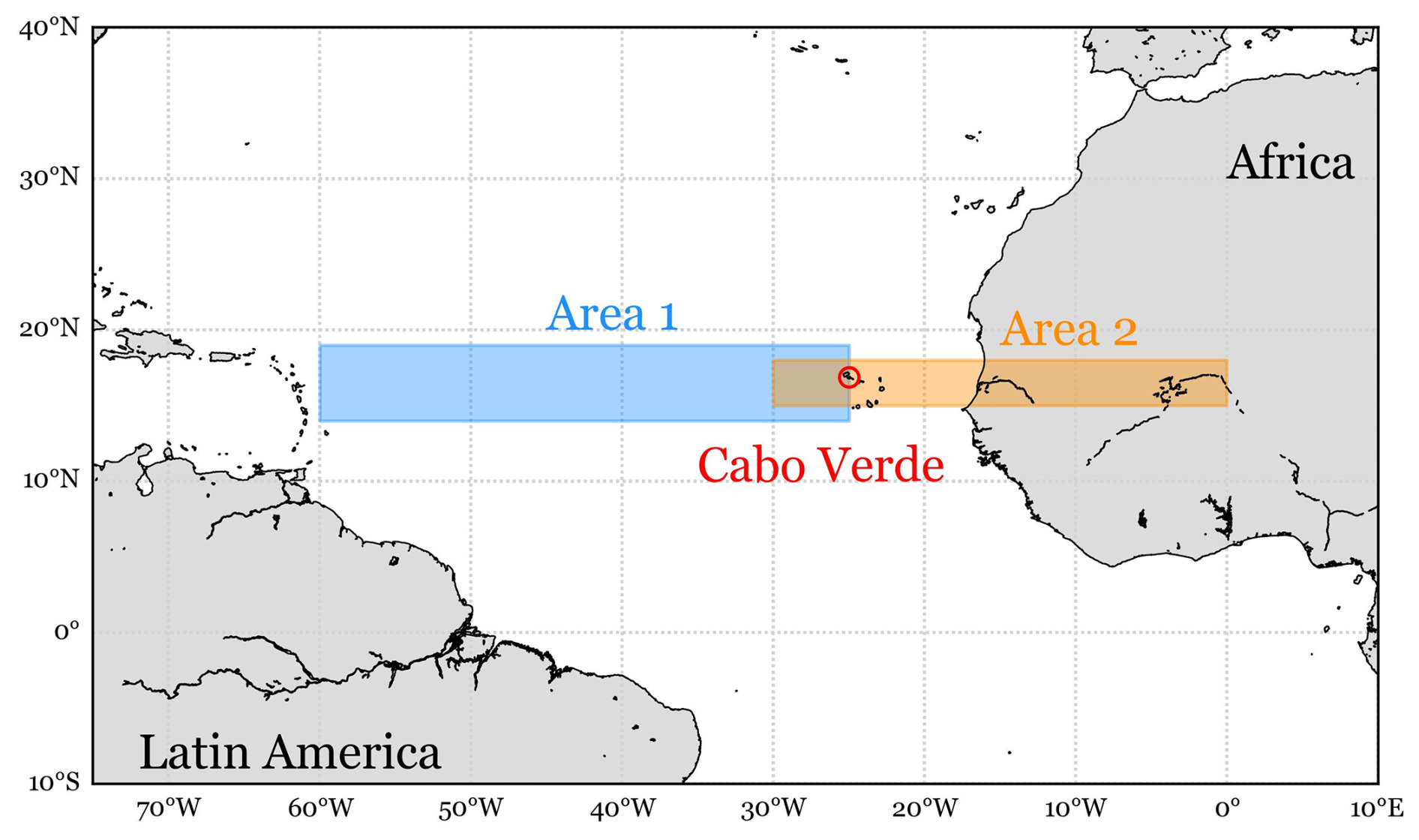
A recent study by Tsikoudi et al. investigates the dynamics of the atmospheric boundary layer (the lowest part of the atmosphere) over the Atlantic Ocean near Cabo Verde, and how it is affected by dust transported from the Sahara. The boundary layer plays a key role in mixing heat, moisture, and particles, influencing clouds, weather, and climate.
Researchers combined ground-based lidars, weather balloons, satellite observations from CALIPSO, and weather model simulations from the European Centre for Medium-Range Weather Forecasts to better understand these processes.
Over the open Atlantic, the marine boundary layer is typically shallow (about 600 to 800 meters high) and shows little difference between day and night. Satellite observations and model results agree well in these ocean regions.
Closer to Africa, where Saharan dust is present, the situation becomes more complex. Dust layers can sit above or mix into the boundary layer, making it harder to define its exact height. As a result, satellite measurements and model estimates sometimes differ. Strong winds can also increase turbulence and raise the boundary layer to around 1 kilometer.
The study highlights that different instruments measure different physical aspects of the atmosphere, so no single method gives a complete picture. Combining satellites, ground-based observations, and models is essential to better understand dust transport, cloud formation, and air–sea interactions in this climatically important region.