From Canada to India: the far-reaching impact of 2023’s wildfire smoke
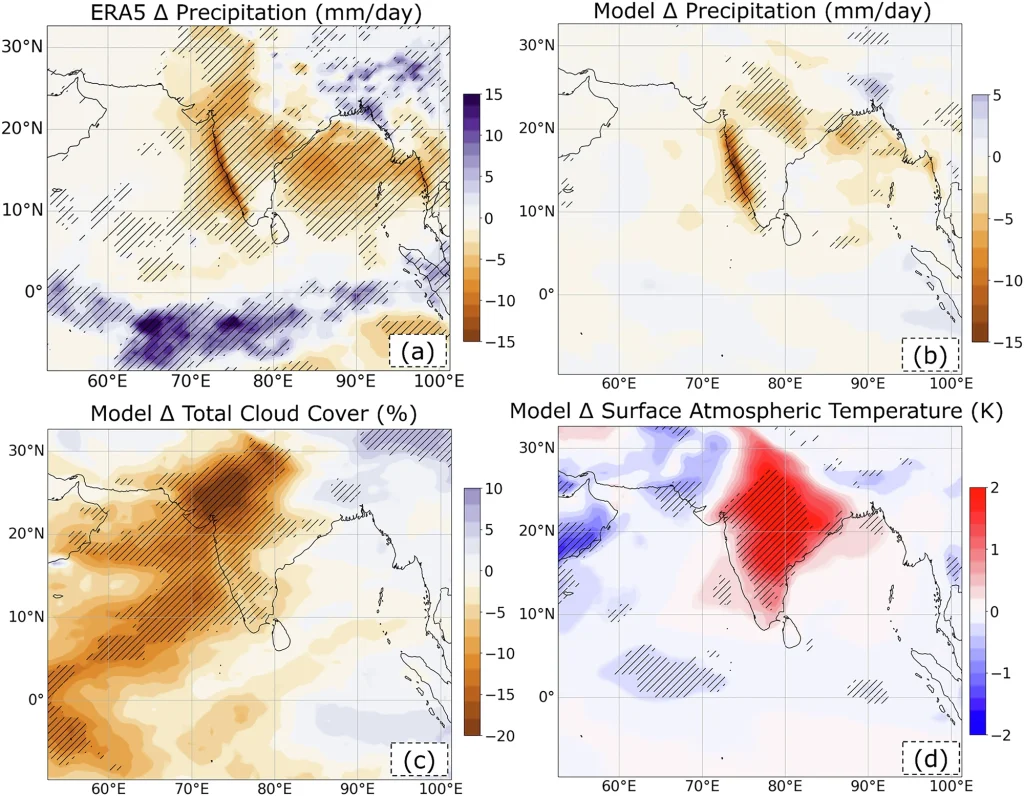
In August 2023, India experienced its driest August since records began, with a 36% rainfall deficit. A new study by Roșu et al. suggests that the unprecedented Canadian wildfires* of the same year may have contributed to this anomaly. The smoke from these fires cooled the atmosphere over Eurasia, weakening monsoon winds and reducing moisture transport to India, which led to significantly less rainfall.
Computer models and satellite data support this connection, showing that the smoke disrupted normal atmospheric circulation, creating a pressure anomaly that weakened the monsoon. This research highlights how massive wildfires can impact weather patterns far from their origin; a concern that is likely to grow as climate change increases the frequency and intensity of such fires.
* These wildfires resulted in the highest wildfire emissions ever recorded in Canada and approximately 5% of Canada’s total forest area has been lost.