Diversity, equity, and inclusion in cloud physics: where do we stand?
How diverse and inclusive is the cloud-physics community? A study by Ladino et al. examines the question using an analysis of 6,987 peer-reviewed publications from 1970 to 2020 and a survey of 198 members of the cloud-physics community, conducted in 2021.
The results reveal persistent gaps in both gender and geographic representation. Women first-author contributions become evident only after around 1997. Their participation has increased since then, but women led only about 17% of cloud-physics studies in 2020. Even among scientists entering the field between 2015 and 2020, only about one-third were women.
Geographic representation is also strongly uneven. Scientists based in the tropics led only about 5% of the publications, while 77% of studies were led by researchers from just seven countries in the Global North. Of 44 studies involving the African tropics, only seven included a tropics-based scientist as a co-author. The authors identify this limited local participation as evidence of the continued presence of “parachute science” in the field.
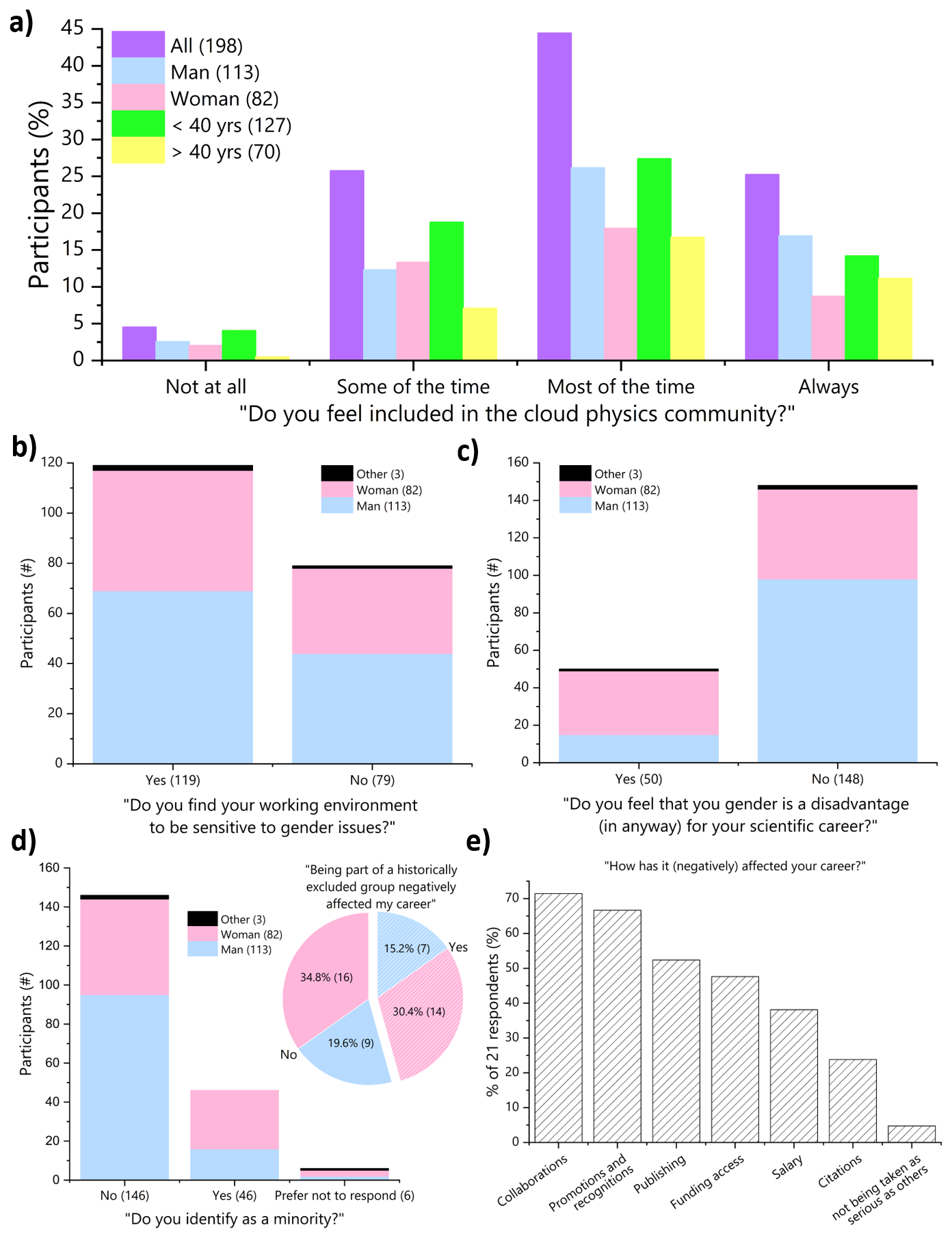
The survey shows that 70% of respondents felt included in the cloud-physics community. However, 30% did not feel fully included, with higher levels of exclusion reported among some younger researchers, LGBTQIA+ participants, and people from historically excluded groups. One-third of respondents reported experiencing bullying or harassment, while 21% reported experiencing a hostile working environment.
The study also finds that the difference between men and women in the length of time they remained academically active in cloud physics has decreased over the past 50 years. However, the proportion of women entering the publication record remains lower than that of men.
The authors argue that improving diversity, equity, and inclusion is important not only for creating a fairer scientific community, but also for strengthening research on the global climate system. They call for more equitable international collaborations, greater participation and leadership from scientists in the Global South, and research environments in which scientists from diverse backgrounds can contribute and lead.